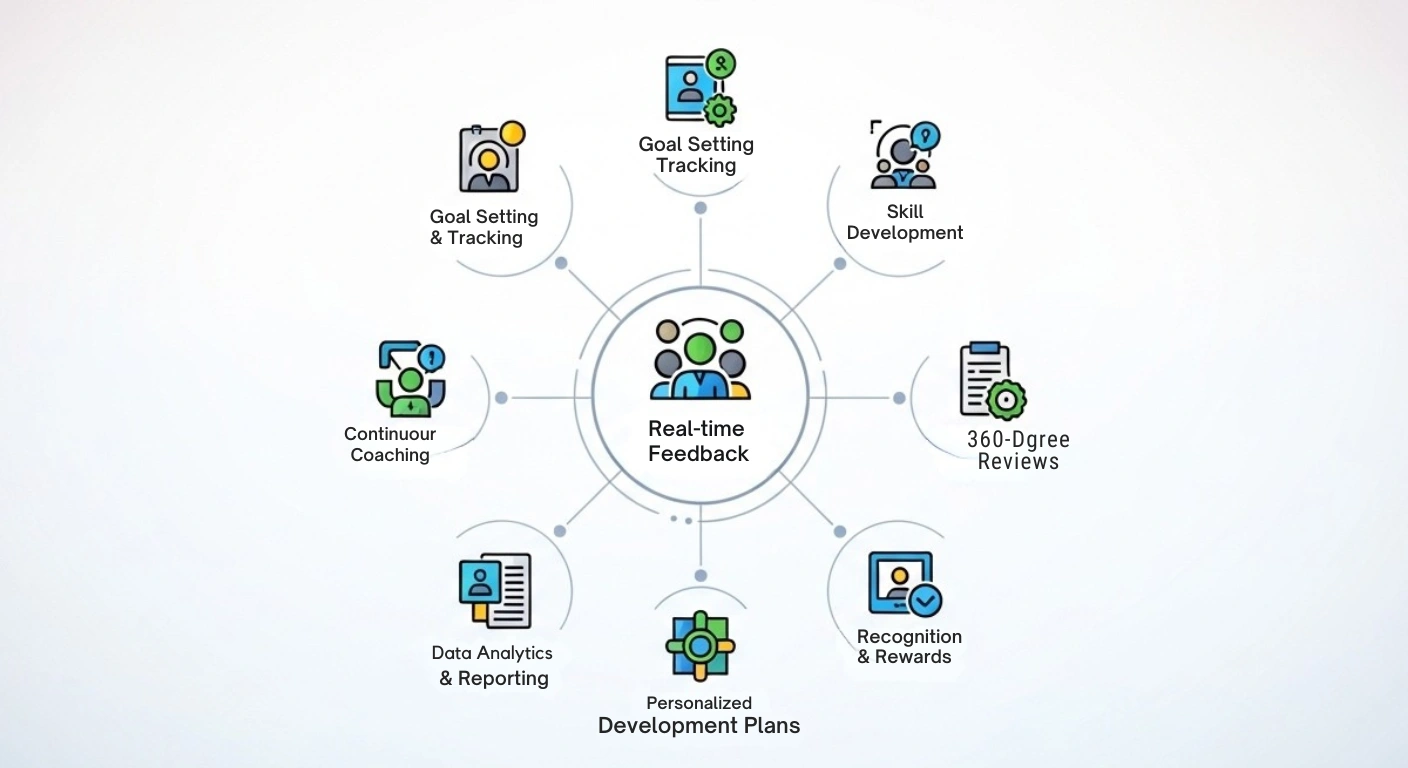
Modern organizations need tools that help teams make progress every day, communicate openly, and make smarter decisions. When goals and insights are all in one place, managers spend less time hunting for information and more time guiding their teams. Here are a few features that make performance management software valuable in today’s workplace:
Real Time Goal Tracking
Keeping goals visible is key for teams to move quickly and stay aligned. Rather than hiding progress in spreadsheets or scattered documents, goals live in a shared system where everyone can see them; this visibility helps employees understand exactly what they are working toward, while leaders monitor performance without constantly requesting updates. Teams spend less time guessing priorities and more time taking action.
Continuous Feedback Tools
In today’s work environments, communication needs to happen continuously. Waiting for formal performance reviews often doesn’t match the speed of real work. Digital feedback tools let managers provide input as projects progress, rather than after the fact. These short feedback loops show employees what’s working well and where they can improve right away.
Because feedback happens naturally during the workflow, conversations feel less forced and more relevant. Teams begin to collaborate more effectively when giving and receiving feedback becomes a regular part of day-to-day work. This routine of ongoing dialogue strengthens both performance and team cohesion.
AI-Driven Performance Insights
Leaders often have large amounts of data but struggle to interpret it. Modern performance management software analyzes this information to reveal patterns across teams. It highlights areas of improvement, points out where support may be needed, and shows how outcomes align with goals. Managers access these insights directly, without spending hours navigating spreadsheets. Trends that would otherwise remain hidden are presented clearly in concise summaries; this clarity enables leaders to respond quickly and make informed decisions, guiding their teams with precision.
Structured Conversation Prompts
Performance discussions often stall when managers are unsure how to begin. Structured prompts provide guidance, suggesting topics that are directly related to an employee’s goals and recent work. This approach eliminates the need for generic questions and keeps conversations focused.
Managers are able to address specific areas for development, while employees are encouraged to share feedback openly. Because the prompts are tied to actual performance, discussions feel practical and relevant rather than awkward or rushed. Over time, using these structured cues helps establish a consistent routine for meaningful dialogue.
Clear Progress Dashboards
Visual dashboards simplify the process of tracking performance across departments. Managers see the completion of set goals, team progress, and development activities all in one place. This centralized view reduces guesswork and highlights areas that require additional attention. Employees also benefit from this transparency, as they are able to observe how their work contributes to larger organizational goals. When progress is clear and measurable, motivation increases and accountability strengthens.
Learn More About Performance Management Software
Performance management software helps organizations move beyond slow, periodic reviews by enabling continuous progress and a clear understanding of data. Teams track objectives openly, leaders make decisions based on real data, and performance discussions become focused and actionable. By centralizing goals and feedback, organizations can turn performance management into a practical, results-driven process. To explore how this software will enhance your organization’s performance, contact a trusted performance management solution provider today.