

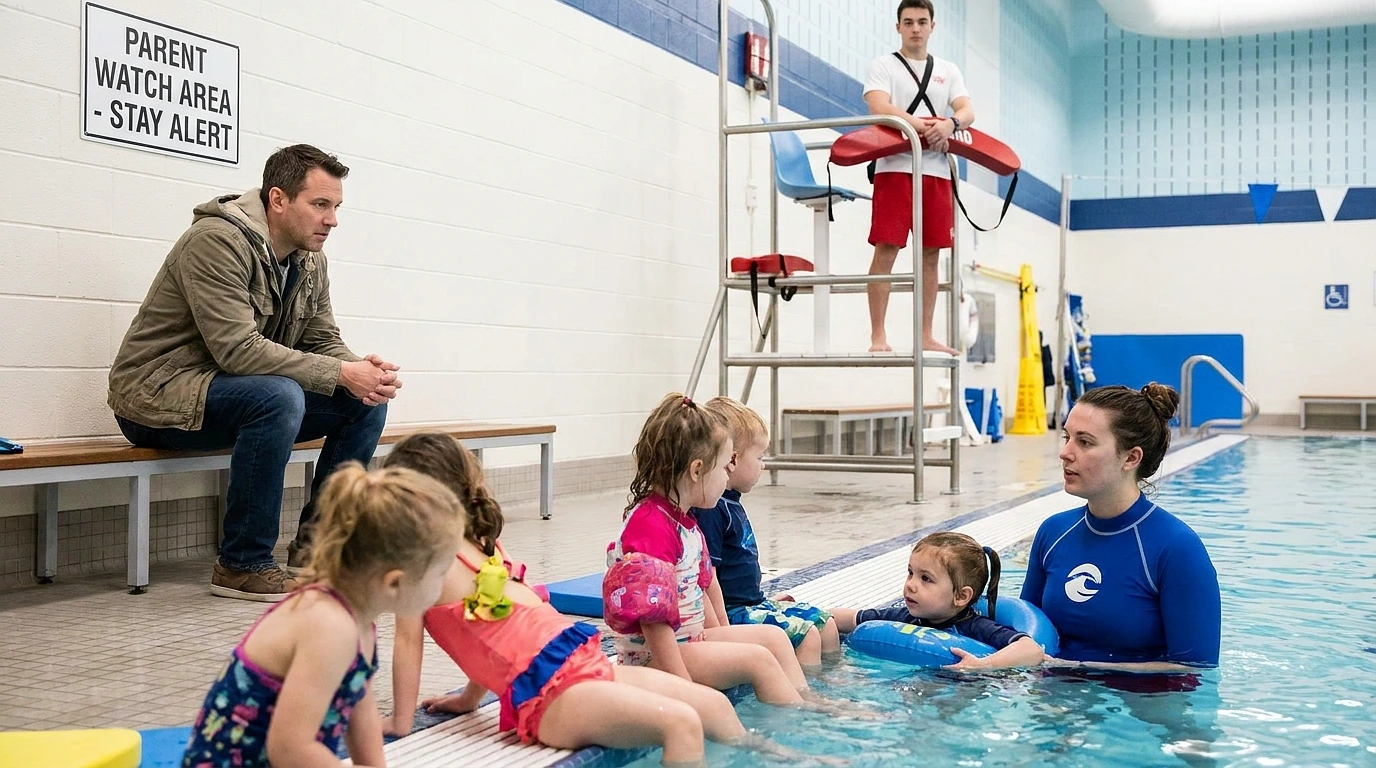

Yes, a child can drown during a swimming lesson. Drowning is a process, not a single event, and the early stages of that process can begin any time a child’s airway dips below the surface without control, including in a supervised class with an instructor standing right there. Most parents assume the presence of a professional removes the risk. It reduces it, but only when the instructor’s methods are sound. When a lesson relies on forced submersion, surprise dunks, or blocking a frightened child from reaching the wall, the lesson itself becomes the hazard.
This matters because water safety classes are the one place parents deliberately hand their child over to deep water. Knowing what healthy instruction looks like, and what distress looks like, is the difference between a class that protects your child and one that quietly harms them.
What Drowning Actually Looks Like
Films have trained people to expect splashing, shouting, and waving arms. Real drowning is almost silent. The World Health Organization defines drowning as respiratory impairment from submersion or immersion in liquid, and that impairment starts within seconds, long before anyone loses consciousness.
In a pool setting, the early stage of the drowning process in a young child often looks like this:
- Vertical body position with the head tilted back, mouth at or just under the waterline.
- Wide, panicked eyes or a glassy, unfocused stare.
- Arms pressing down on the water rather than swimming through it.
- No sound at all, because the body prioritizes breathing over crying or calling out.
- Gasping, coughing, or repeated swallowing when the face clears the surface.
A child showing these signs is not “learning to self-rescue.” That child safety is aspirating or at immediate risk of aspirating water, and every second in that state carries physical and psychological cost. The Centers for Disease Control and Prevention notes that drowning outcomes range from no lasting injury through permanent brain damage to death, and that nonfatal drowning incidents far outnumber fatal ones.
Why Some Popular Teaching Methods Cross the Line
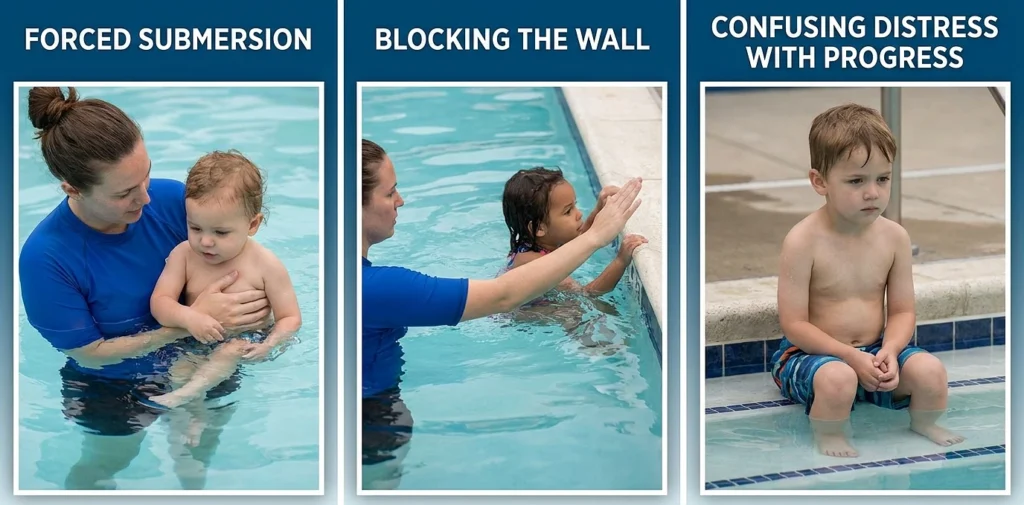
Not every dramatic swim video shows abuse, and not every tearful lesson is dangerous. Toddlers cry about swim caps. The line sits somewhere specific: it is crossed when an instructor deliberately puts a child into the drowning process as a teaching tool.
Forced or surprise submersion
Tossing, pushing, or pulling a crying child underwater without preparation or consent floods the body with stress hormones at the exact moment the brain is supposed to be encoding a motor skill. Fear narrows attention and shuts down learning. A terrified child is not practicing a breath hold. That child is surviving an event.
Blocking the wall
Some instructors physically prevent children from grabbing the pool edge, reasoning that reliance on the wall creates false confidence. Reaching for the wall is a survival behavior. Training a child that the wall will be denied to them teaches exactly one lesson: help is not coming. That belief follows children into open water, where hesitation to grab a dock, a ladder, or a rescuer’s arm can be fatal.
Confusing distress with progress
A child who stops crying after several sessions of forced submersion has not necessarily learned to love the water. Often the child has learned that protest changes nothing. Quiet compliance built on shutdown is routinely mistaken for water confidence, and it collapses under real stress, which is precisely when a child needs skills the most.
Warning Signs an Instructor Is Putting Children at Risk
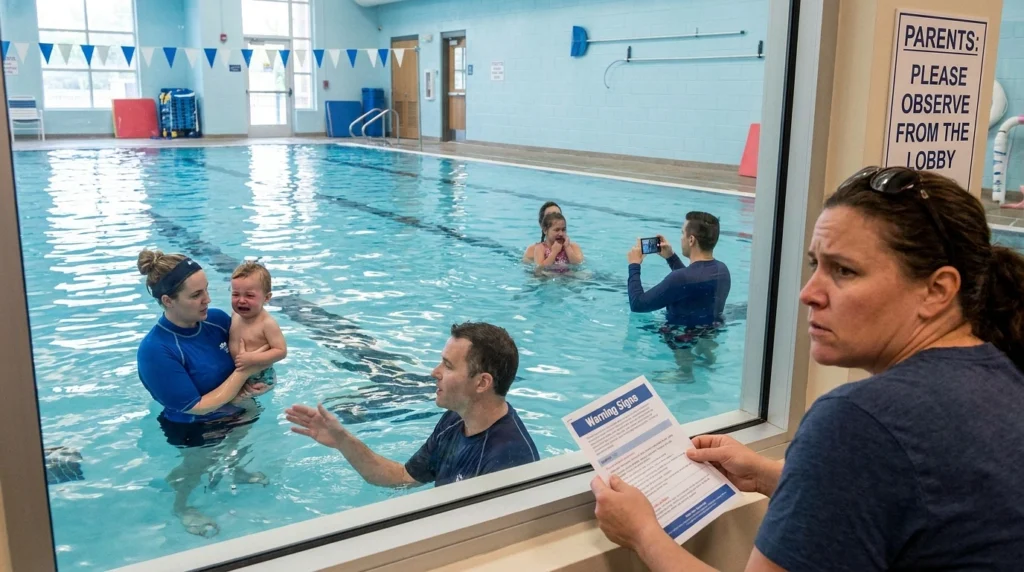
Watch the deck, not the marketing. An instructor’s social media reel is edited. The lesson in front of you is not. Be concerned when you see:
- Children submerged while actively crying or immediately after crying.
- Faces going under with mouths open mid-sob, followed by coughing or vomiting water.
- The instructor filming distressed moments for promotional content.
- Children forbidden from touching the wall, steps, or the instructor for comfort.
- Dismissive answers when parents ask about method, credentials, or safety protocols.
- Pressure on parents to stay away from the pool deck or stop watching.
What Safe, Effective Swim Lessons Look Like
Good instruction is not soft instruction. Children can and should learn breath control, back floating, and self-rescue skills early. The American Academy of Pediatrics recommends swim lessons for most children starting around age one, and research it cites links lessons to a meaningful reduction in drowning risk among young children. The difference lies in how skills are built.
Strong programs share a few traits:
- Gradual water introduction, with submersion only after a child shows readiness cues such as voluntary face-dipping.
- Instructors who respond to distress by pausing, comforting, and adjusting, rather than pushing through it.
- Skills layered in small, repeatable steps a child can succeed at.
- Open pool decks where parents can watch every minute of every lesson.
- Certification through recognized bodies, and clear answers about emergency training, CPR currency, and student-to-instructor ratios.
The American Red Cross offers plain-language guidance on layered water safety that any legitimate program should be comfortable discussing with you, from barriers and supervision through lessons and CPR.
If You Saw Something That Worried You
Trust the discomfort. Parents talk themselves out of concerns because the person in the water holds themselves out as an expert, and questioning an expert feels rude. Your child’s airway outranks anyone’s feelings.
Practical steps that actually move things forward:
- Pull your child from the program first, and sort out refunds later.
- Write down what you observed, with dates, before memory fades.
- Ask the facility, not just the individual instructor, for their safety policy in writing.
- Report serious concerns to your local health department, which typically oversees public and semi-public pools.
- Have your pediatrician evaluate your child after any incident involving coughing, vomiting, unusual sleepiness, or breathing changes following submersion.
Swim lessons remain one of the best gifts you can give a child. Water competency saves lives across an entire lifetime, and the majority of instructors do careful, patient, genuinely protective work. The point is not to fear lessons. The point is to choose them with the same scrutiny you would apply to anyone else you trust with your child’s ability to breathe.