
Running a small business is an exciting endeavor, but it comes with its fair share of challenges. One of the most important areas to focus on is protecting your business from legal risks. A single legal issue can not only drain your finances but also jeopardize your reputation and put your business in danger. We’ll cover essential legal strategies to safeguard your small business and ensure its long-term success.
Why Legal Protection Matters for Your Business
Legal issues can arise unexpectedly and potentially harm your business. Whether it’s an employee dispute, an intellectual property conflict, or a customer complaint, having the right legal strategies in place can protect you from these risks.
- Financial Risks: Legal issues can lead to costly lawsuits, fines, and settlements.
- Reputation Damage: Public legal disputes can harm your business’s reputation and customer trust.
- Operational Disruptions: Legal battles may distract you from running your business efficiently.
Legal protection is not just about avoiding trouble it’s about ensuring your business can thrive without the constant threat of legal challenges.
Choose the Right Business Structure
The structure of your business determines your liability, tax obligations, and overall management. Choosing the right structure is the first step in protecting your business legally.
- Sole Proprietorship: Offers no personal liability protection.
- Partnership: Shared ownership with shared liability.
- LLC (Limited Liability Company): Provides personal liability protection and flexibility.
- Corporation: Offers the highest level of liability protection but comes with complex rules.
An LLC is often the best choice for small business owners because it offers a balance of protection and ease of management.
Register and Protect Your Trademarks & Intellectual Property
Your business’s ideas, products, and branding are valuable assets. Protecting these intellectual properties (IP) ensures that no one can steal or misuse your creations.
- Trademarks: Protect your business name, logo, and slogans.
- Patents: Safeguard your inventions or unique products.
- Copyrights: Protect creative works like books, music, and software.
- Trade Secrets: Confidential business info, like recipes or formulas, should be kept secure.
Registering your IP ensures that you have legal recourse if someone infringes on your rights.
Contracts Should Be Ironclad
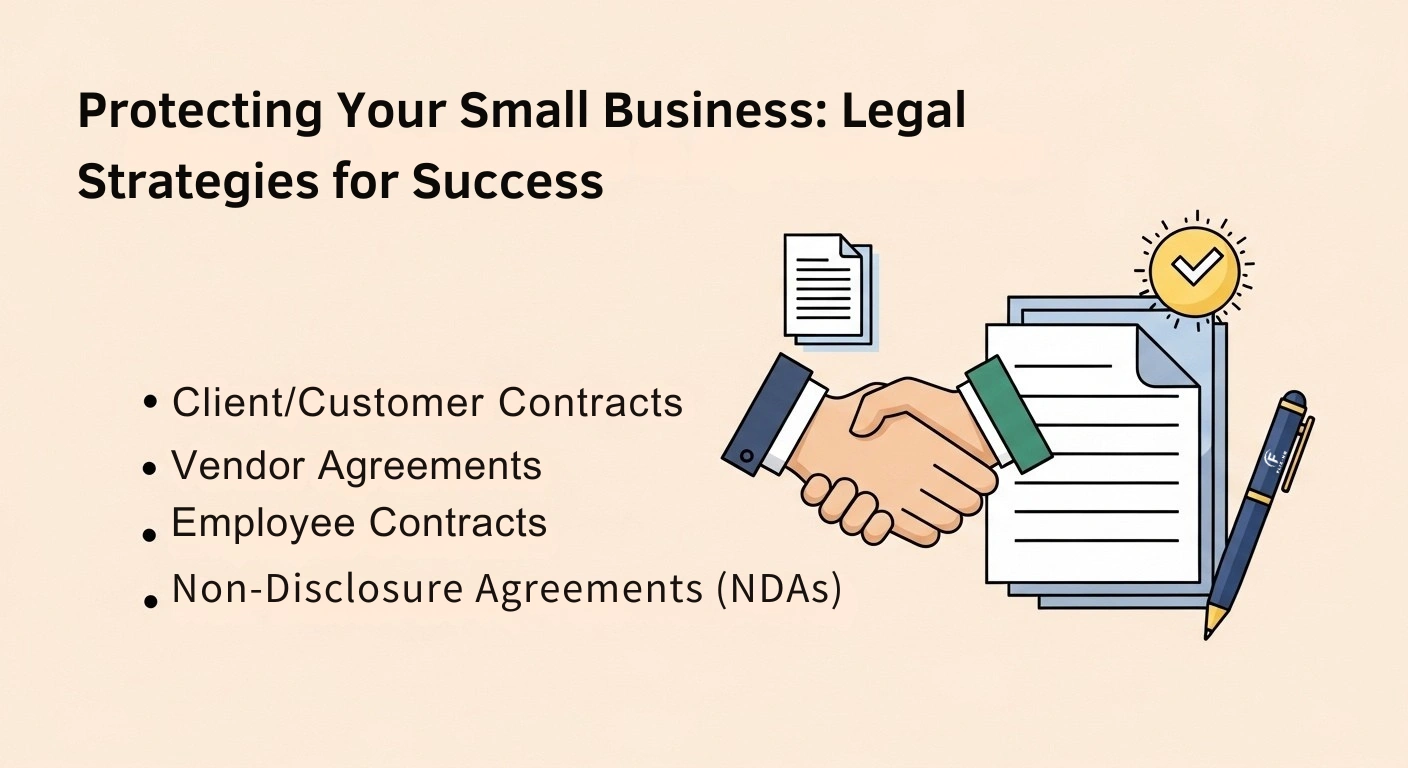
Contracts help set clear expectations and protect your interests in business dealings. They are essential when working with clients, vendors, and employees.
- Client Contracts: Outline the scope of work, payment terms, and deadlines.
- Vendor Agreements: Ensure reliable supply and pricing terms.
- Employment Contracts: Set expectations for roles, compensation, and benefits.
- Non-Disclosure Agreements (NDAs): Keep your sensitive information confidential.
Having well-drafted contracts is one of the best ways to avoid misunderstandings and disputes.
Employment Law Stay Compliant
Employment laws can be complex, but it’s crucial to understand them to avoid legal problems related to your employees.
- Classify Employees Correctly: Know the difference between employees and independent contractors.
- Fair Wages: Ensure compliance with minimum wage laws and overtime rules.
- Workplace Safety: Maintain a safe working environment to comply with OSHA standards.
- Anti-Discrimination Laws: Ensure you follow laws regarding race, gender, and disability protections.
Staying compliant with employment laws helps you avoid lawsuits and maintain a positive working environment.
Data Protection, Privacy, and Cybersecurity
In the digital age, protecting customer data and business information is critical. Data breaches can lead to costly penalties and damage your business’s reputation.
- Secure Customer Data: Use encryption and secure passwords to protect personal information.
- Comply with Laws: Follow regulations like GDPR, CCPA, and other privacy laws.
- Cybersecurity Measures: Implement strong firewalls and backup systems to protect against cyberattacks.
Cybersecurity and data protection are vital to maintaining customer trust and avoiding legal trouble.
Insurance That Actually Protects You
Insurance provides financial protection in case something goes wrong. It’s essential to have the right coverage to safeguard your business.
- General Liability Insurance: Covers bodily injury and property damage claims.
- Professional Liability Insurance: Protects against errors and omissions in services provided.
- Business Owner’s Policy (BOP): Bundles property and liability insurance for a comprehensive plan.
- Workers’ Compensation Insurance: Covers employee injuries while on the job.
Insurance helps you manage risks and avoid costly setbacks.
Builda Business Continuity Plan
Having a continuity plan ensures that your business can continue to operate during times of crisis, whether it’s a natural disaster, cyberattack, or financial setback.
- Create Backup Systems: Ensure your data and operations are backed up and secure.
- Have a Crisis Communication Plan: Know how to communicate with employees, clients, and stakeholders during an emergency.
- Maintain Financial Reserves: Have funds set aside to help your business recover quickly.
A business continuity plan helps ensure that you’re prepared for unexpected disruptions.
Asset Protection & Legal Safeguards
Asset protection strategies shield your business’s valuable assets, such as real estate, inventory, and intellectual property, from lawsuits and creditors.
- Use Trusts: Establish asset protection trusts to shield personal assets.
- Separate Personal and Business Assets: Keep your business and personal finances separate to reduce risk.
- Legal Safeguards: Use LLCs and other legal structures to protect personal property from business-related liabilities.
These strategies give you extra protection and security, keeping your hard-earned assets safe.
Final Thoughts
Protecting your small business legally is not a one-time task; it’s an ongoing process that requires vigilance and proactive measures. By choosing the right business structure, securing your intellectual property, using contracts to protect your relationships, staying compliant with employment laws, and preparing for unforeseen events, you can ensure that your business is legally protected and able to thrive. Remember, a little legal foresight today can save you from significant headaches tomorrow.